Indian Hand Carved Jali Work Architectural Detail
Product ID: A2400-074
Price on request
About this piece
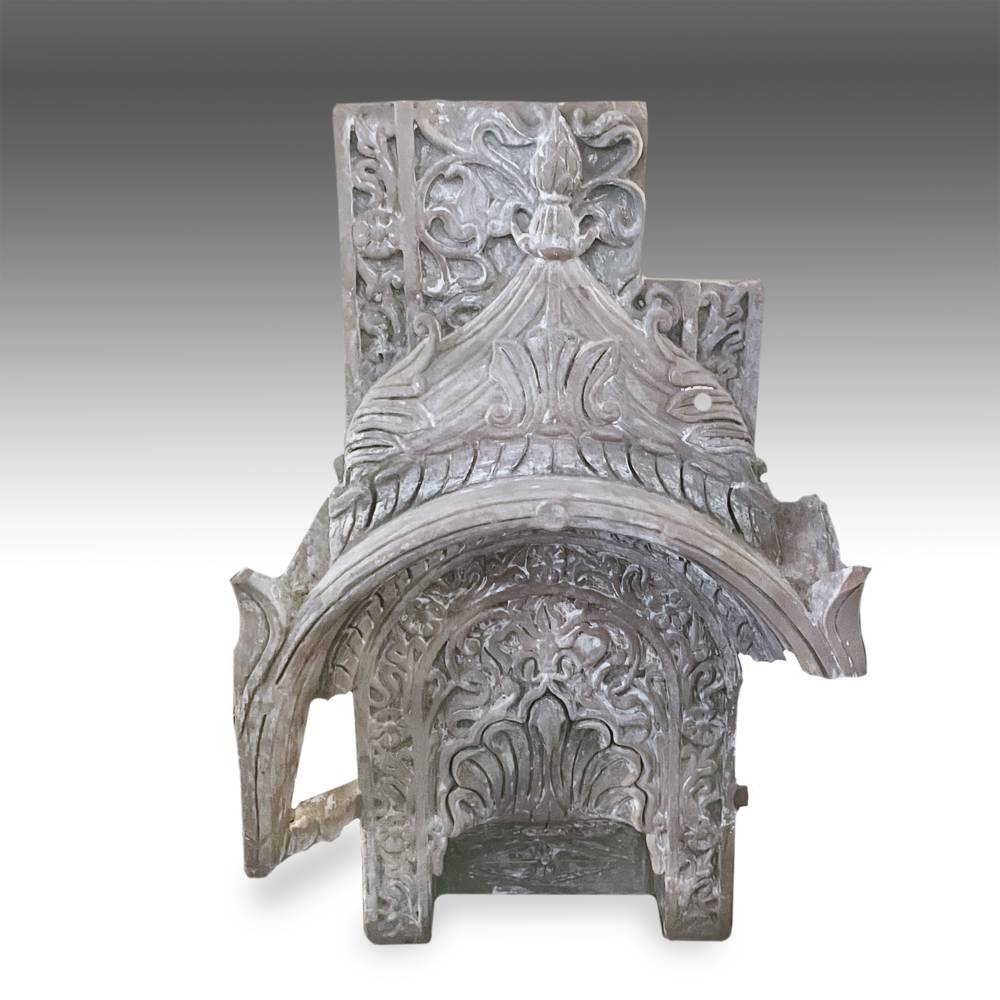
Miniature temple front that lost an argument with gravity and kept its dignity.
This hand carved sandstone jali work architectural detail is from Rajasthan, India, and dates to the 18th century. Hand carving a jali means cutting a repeating pattern through a solid stone slab, a slow task that depends on careful layout and steady chisel work. Stepped, gabled architectural fragment with a deep arched niche carved in dense scrolling leaves and a shell-like fan at the base. Foliate relief climbs the pinnacle. The surface wears a pale gray wash, with broken edges at the right. It is 19 inches wide, 10 deep and 29 high.
Carved with the confidence of someone who never saw a blank space.