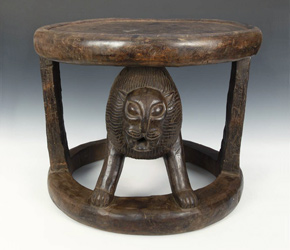
Bamileke Lion Stool
The Bamileke people designate stools depicting lions strictly for the Fon, or cheif. There is a Bamileke saying that states, ‘Only the chief sits on the lion.
The Bamileke people designate stools depicting lions strictly for the Fon, or cheif. There is a Bamileke saying that states, ‘Only the chief sits on the lion.
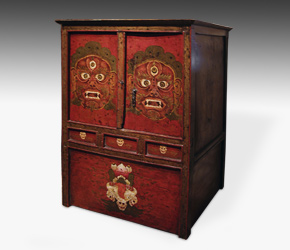
It can be said with certainty this cabinet was used in a monastery because of the depiction of the deity Mahakala on the two door faces. Mahakala is…
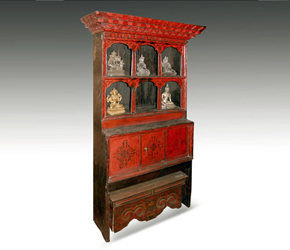
This Tibetan torgam or chosum altar cabinet is estimated to be in excess of 200 years old. It is part of a particular class of cabinets called torgam,…
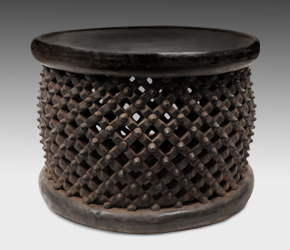
Bamileke stools and throne chairs depict ancestors or their intermediaries; the most famous and copied type depicting spiders, a creature serving as the link between the living and…
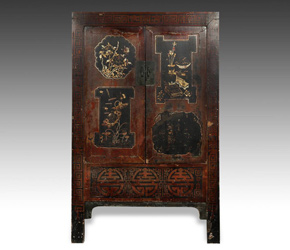
The Chinese concept of gu instead of the western concept of provenance and the most aesthetically pleasing pieces have become the most valuable.
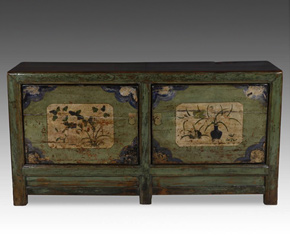
The term vernacular, with a broad brush, describes Chinese society outside the Imperial court, whose influence spread far and wide from the Forbidden City in the capital of…
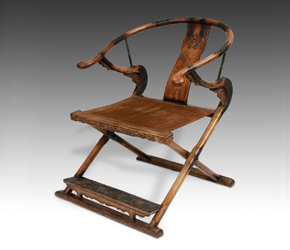
Classical antique Chinese furniture is distinguished by beautiful shapes and simple, subtly decorated moldings. Designs can sometimes be so simple they might appear stark and plain.
Classical Chinese furniture emphasized the natural beauty of expensive hardwoods, which were often waxed to give a glossy, resistant surface as opposed to lacquering and painting, which was…
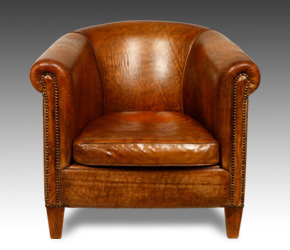
The design and craftsmanship of sheep leather furniture was perfected in Holland and spread to other countries like France and England.
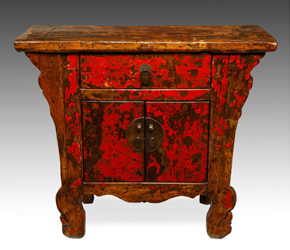
Classical Chinese furniture emphasized the natural beauty of expensive hardwoods, which were often waxed to give a glossy, resistant surface. Woods such as Rosewood, Zitan, Zelkova, and Hunghuali…
New pieces, sent to you before they are shown.