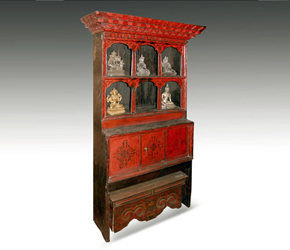
Tibetan Torgam or Chosum Altar Cabinet
This Tibetan torgam or chosum altar cabinet is estimated to be in excess of 200 years old. It is part of a particular class of cabinets called torgam,…
Peoples, deities and the objects they made: notes on the cultures behind the collection.
This Tibetan torgam or chosum altar cabinet is estimated to be in excess of 200 years old. It is part of a particular class of cabinets called torgam,…
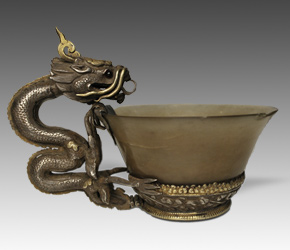
Dragon images date back to Chinese Neolithic stone carvings. Dragons are described as the embodiment of yang principles of heaven, spring, change and creative energy.
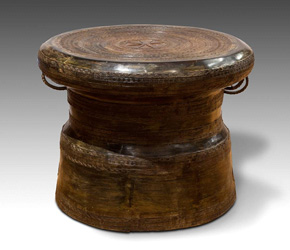
Forged and found in Thailand, “rain” drums have been found in most other countries in Southeast Asia and as far away as Indonesia, known as frog or kha…
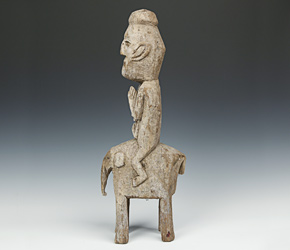
Bridge Watchers are wooden Nepalese figures typically found in a classic canon, hands meeting in meditation while they gaze face forward.
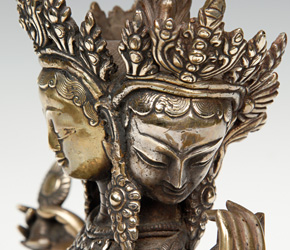
Vasundhara is a deity found in both the Hindu and Buddhist pantheon, particularly in Nepal. In Hinduism she is considered the goddess of wealth along with another deity…
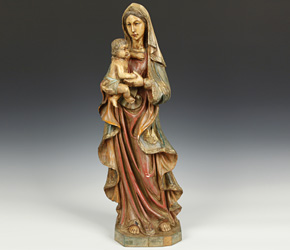
By the 1820s, the Catholic church once again established itself in Vietnam as French Indochina. Persecutions had taken place under the rule of Emperor Minh Hang, known as…
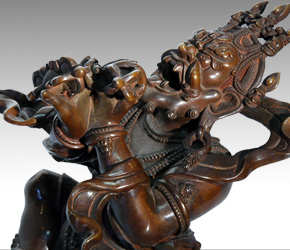
Mahakala is a fierce protector of Buddhism. Mahakala is most often depicted as a spiritual protector, who vanquishes fear, hate and jealousy.
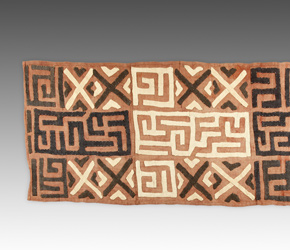
Kuba cloth has a unique, geometric style. Some say the designs found on Kuba cloth are based on the tribal scarification patterns of the Kuba people themselves.
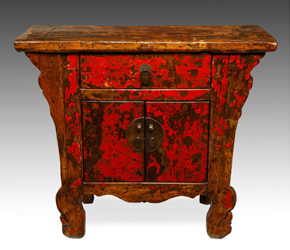
Classical Chinese furniture emphasized the natural beauty of expensive hardwoods, which were often waxed to give a glossy, resistant surface. Woods such as Rosewood, Zitan, Zelkova, and Hunghuali…
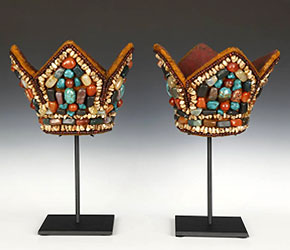
Ladakh, today a part of Northern India, is the largest Tibetan refugee area in the world. This is because Ladakh continued to look to Tibet for religious inspiration…
New pieces, sent to you before they are shown.