Japanese
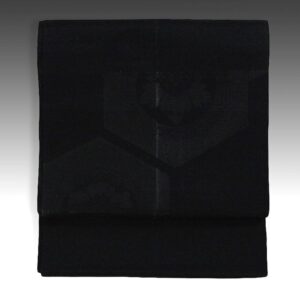
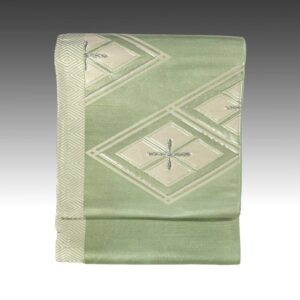
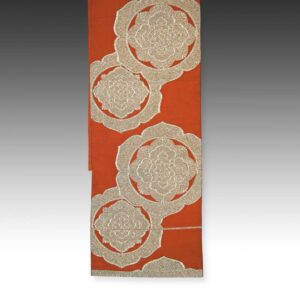
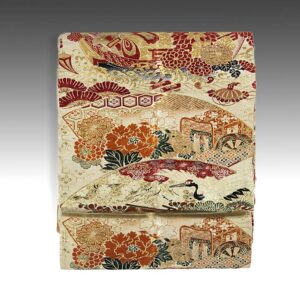
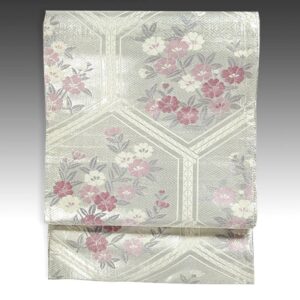
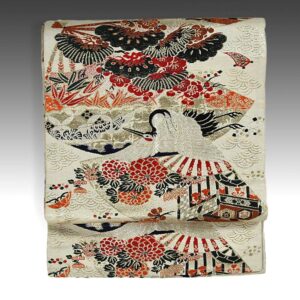
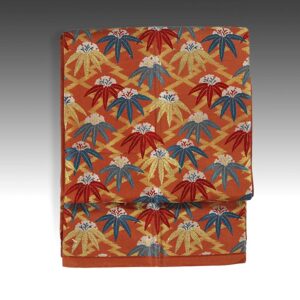
Silk obi, woven around 1940 with cranes, bamboo and sewing spools. Japanese textiles here include silk obi, kimono and haori jackets from the 20th century, with maru, fukuro and Nagoya obi from around 1940. The maru obi, the most formal, is woven wide and folded double, the fukuro obi is patterned mainly on its face, and the Nagoya obi is folded narrow at one end for easier tying. Motifs run from cranes in landscape to butterflies, hexagonal medallions, mon crests and itomaki, or sewing spools.
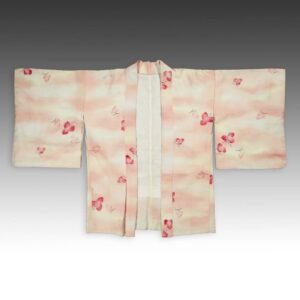
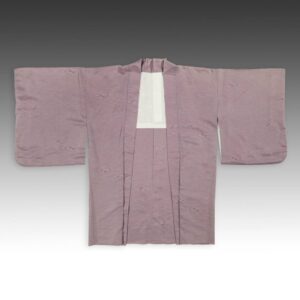
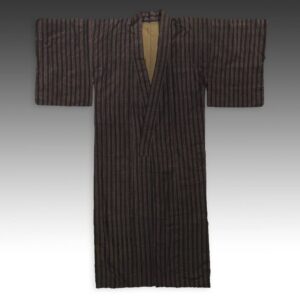
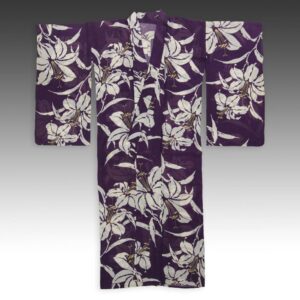
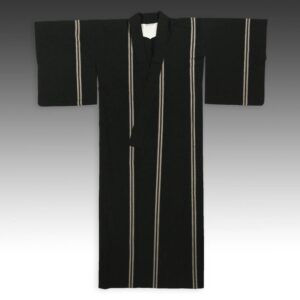
Kimono include a man’s kimono, an unlined hitoe summer kimono with lilies and a cotton kimono with a metallic stripe, along with haori jackets, one scattered with cherry blossom. A long obi runs beautifully down the center of a dining table, and a kimono hung from a bamboo pole makes a quiet wall. Obi were made to be tied tight, and most seem relieved to lie flat for a change.
In the collection now: Japanese Nagoya Obi with Abstract Motif, Japanese Haori or Kimono Jacket, and Japanese Silk Kimono Pillow.
Showing 1–12 of 28 results