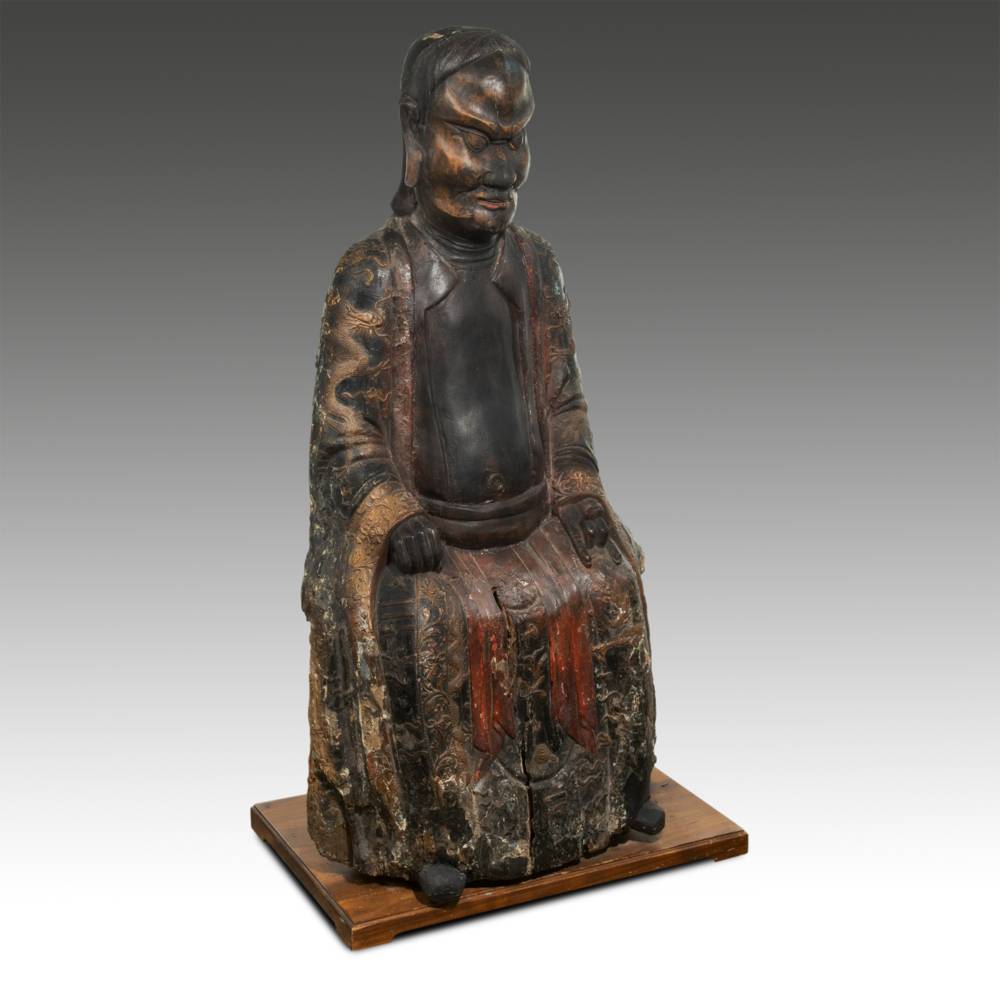
Chinese Seated Daoist Figure Depicting Karana and Kataka Mudra
Product ID: A2200-156
$6,950.00
About this piece
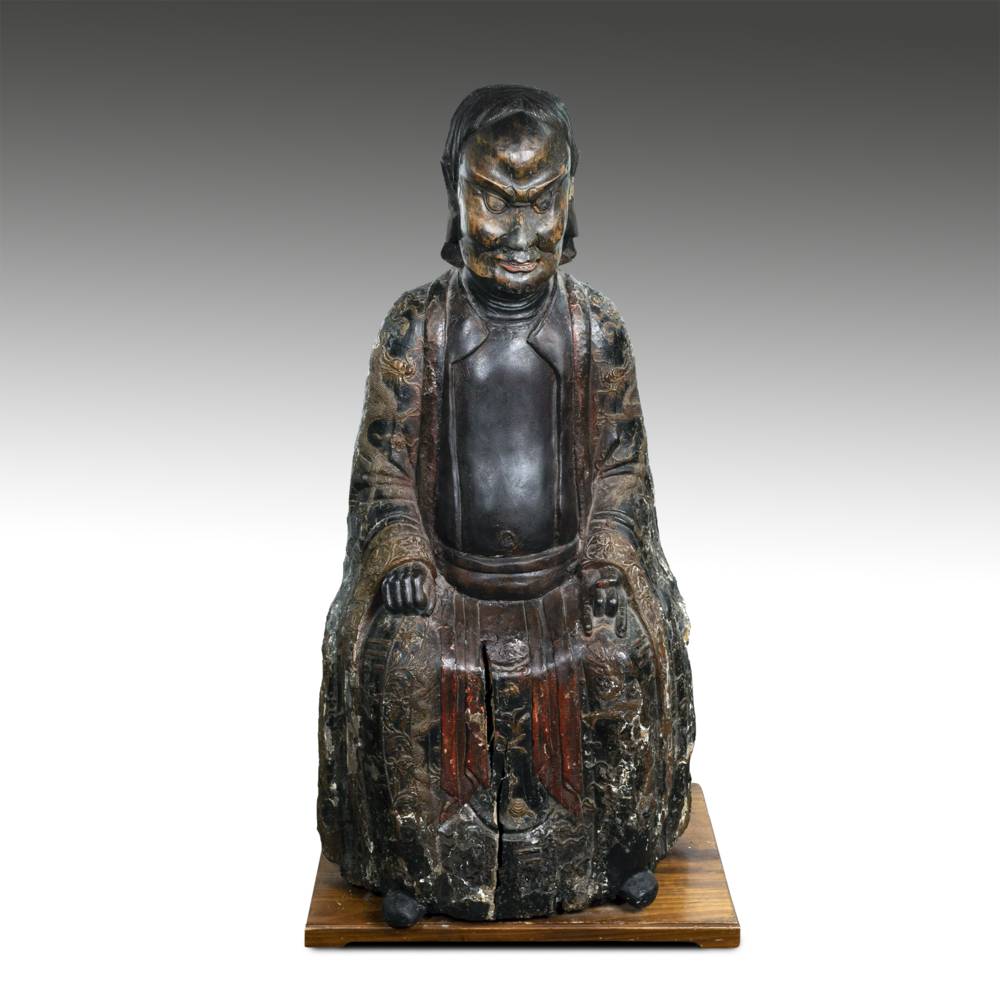
The brow is furrowed, the gaze is level. He has the look of someone hearing a case.
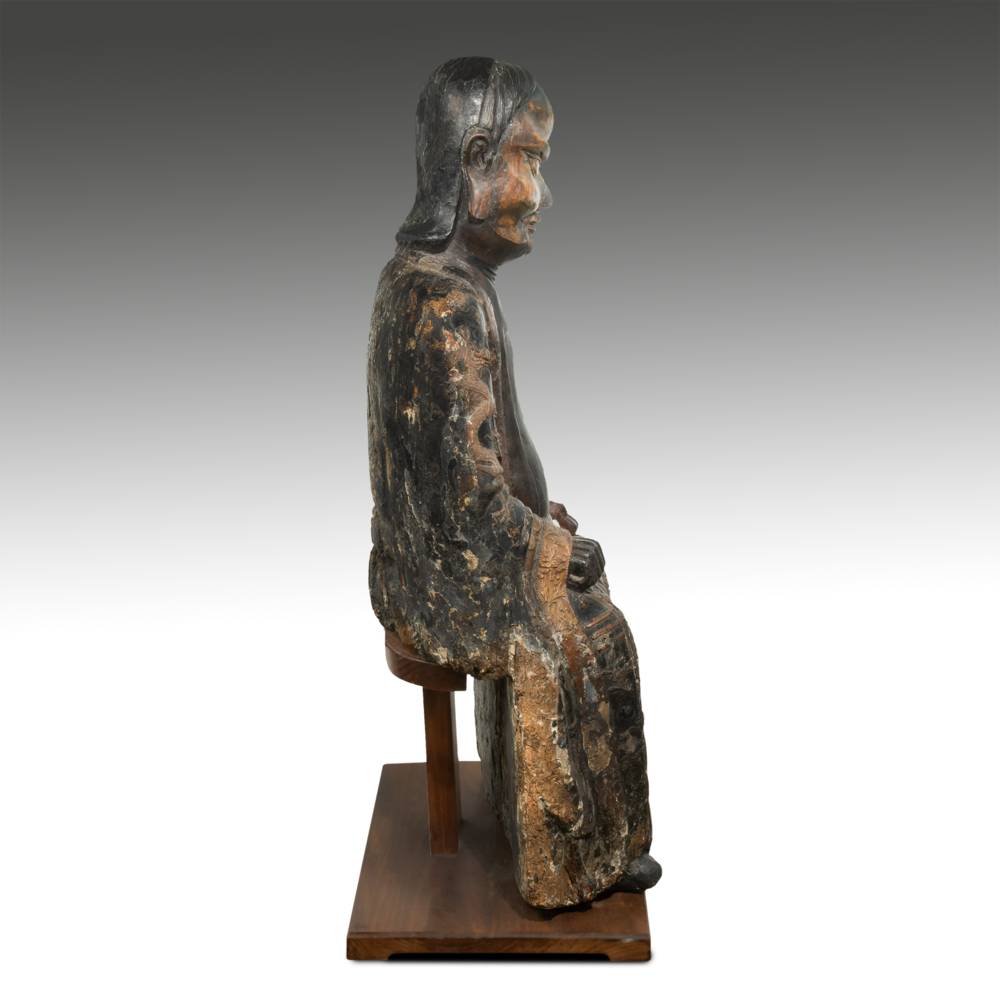
This seated Daoist figure comes from China and dates to the early 19th century, carved in gilded and painted wood. The title notes the karana and kataka mudras, hand gestures with set meanings in Asian religious art. Figures like this were carved for Daoist temples and home altars, where worshippers brought offerings and requests to deified officials and immortals, often shown as stern figures of rank. Traces of gold pattern cover the dark robes, with red showing in the long central panels. A deep split runs up the front of the skirts. Forty-six inches high.
He appears to be deliberating still.