Koma Ceramic Funerary Figure, Based
Product ID: A0301-177
$1,795.00
About this piece
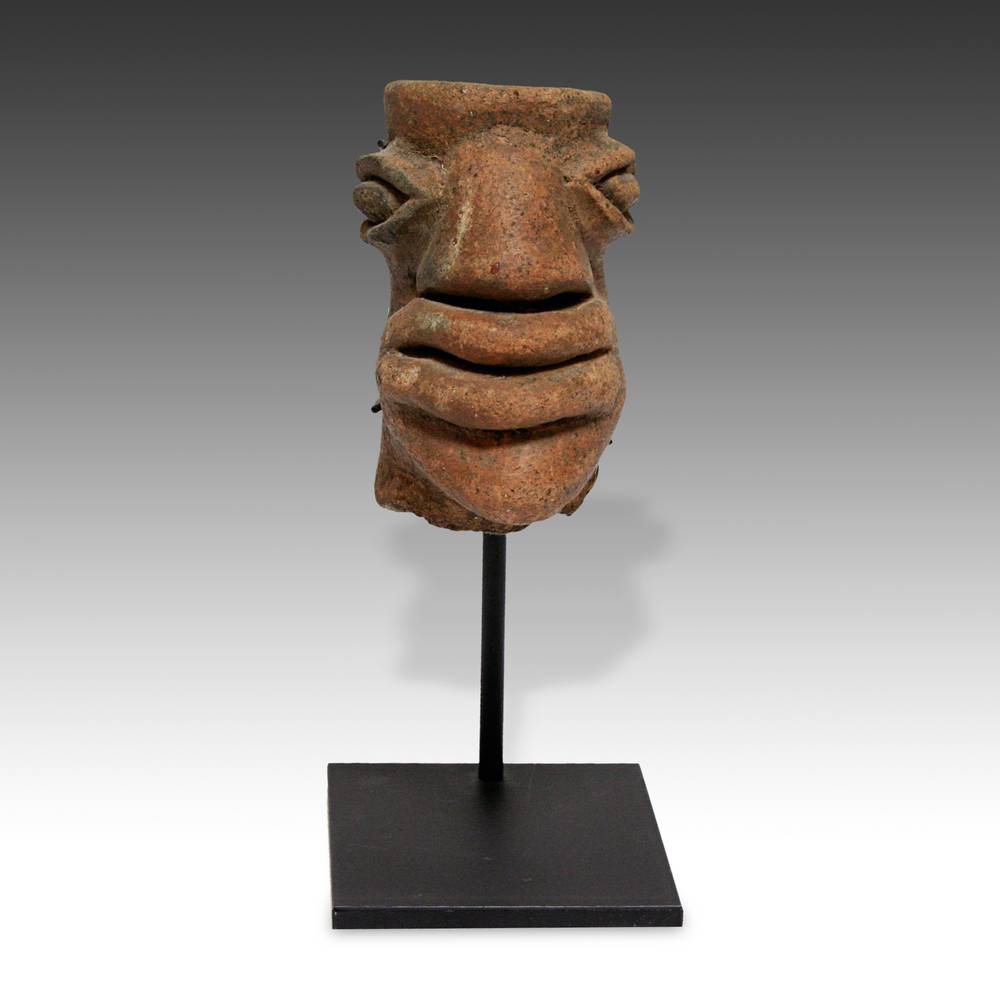
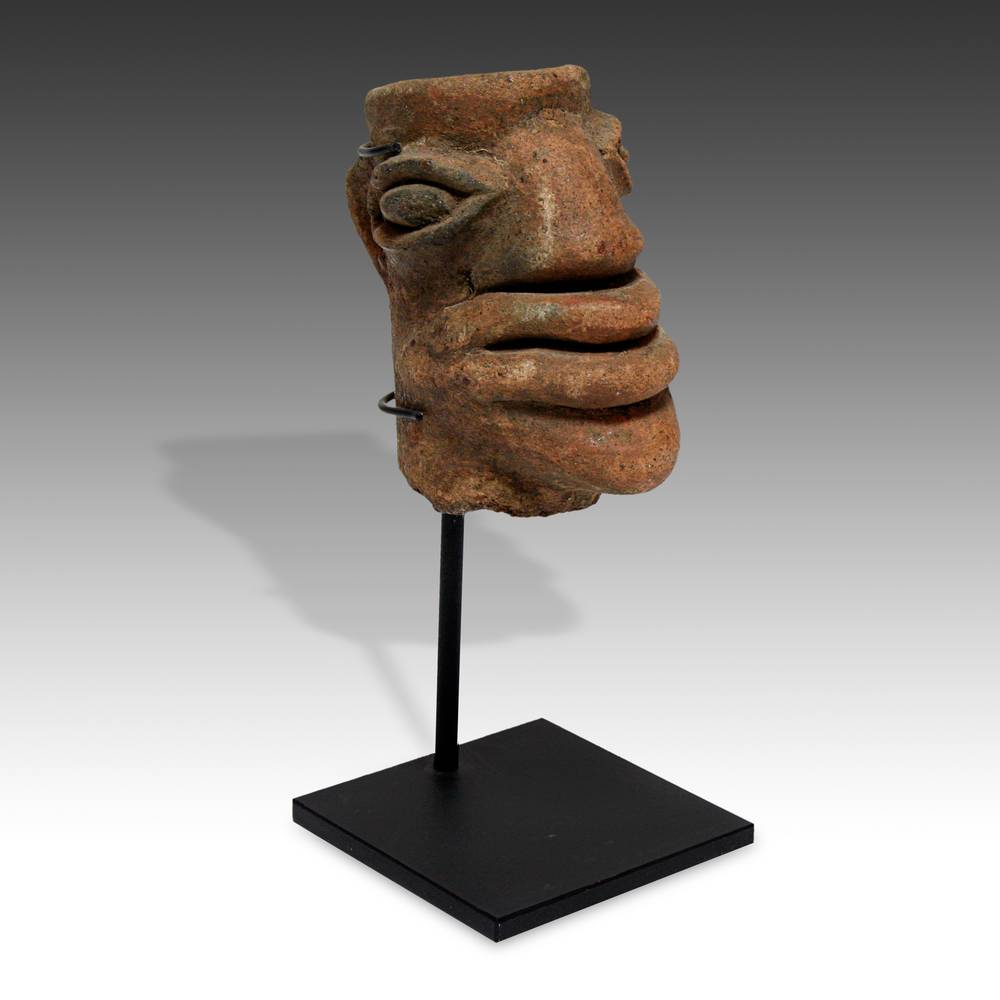
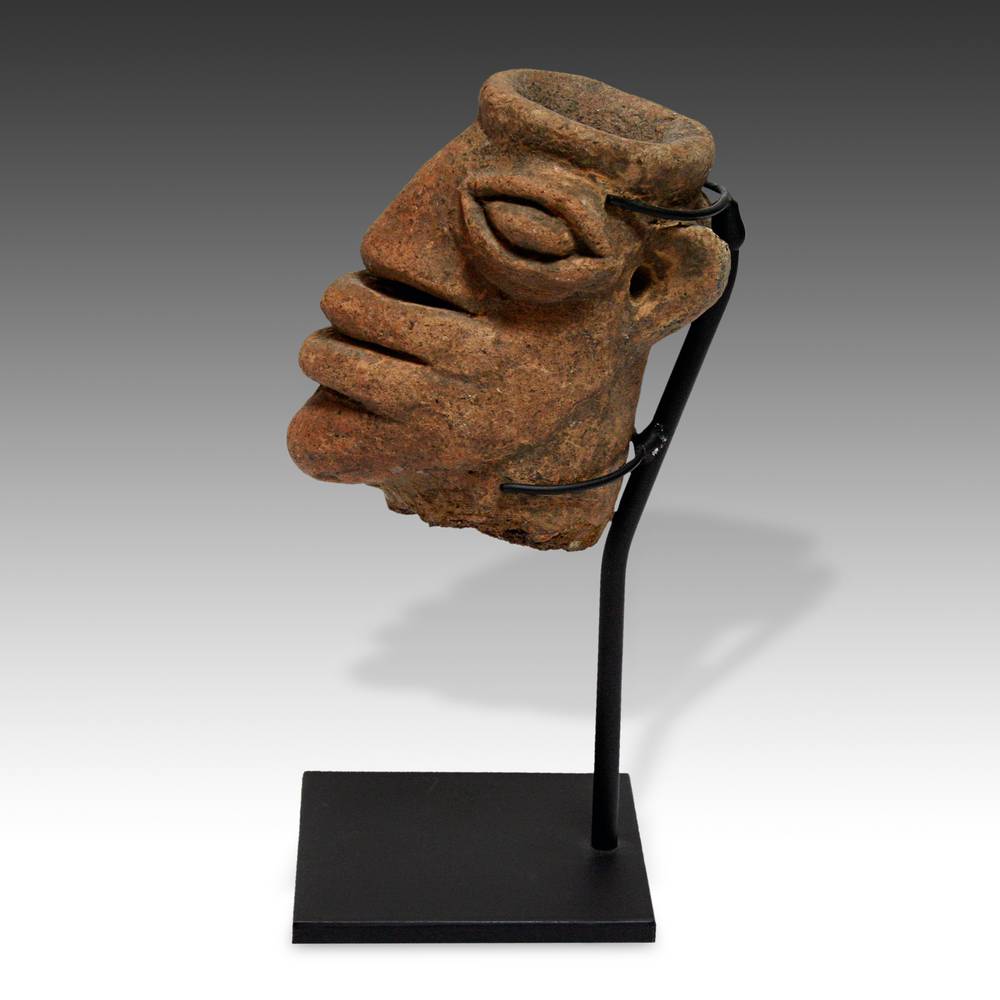
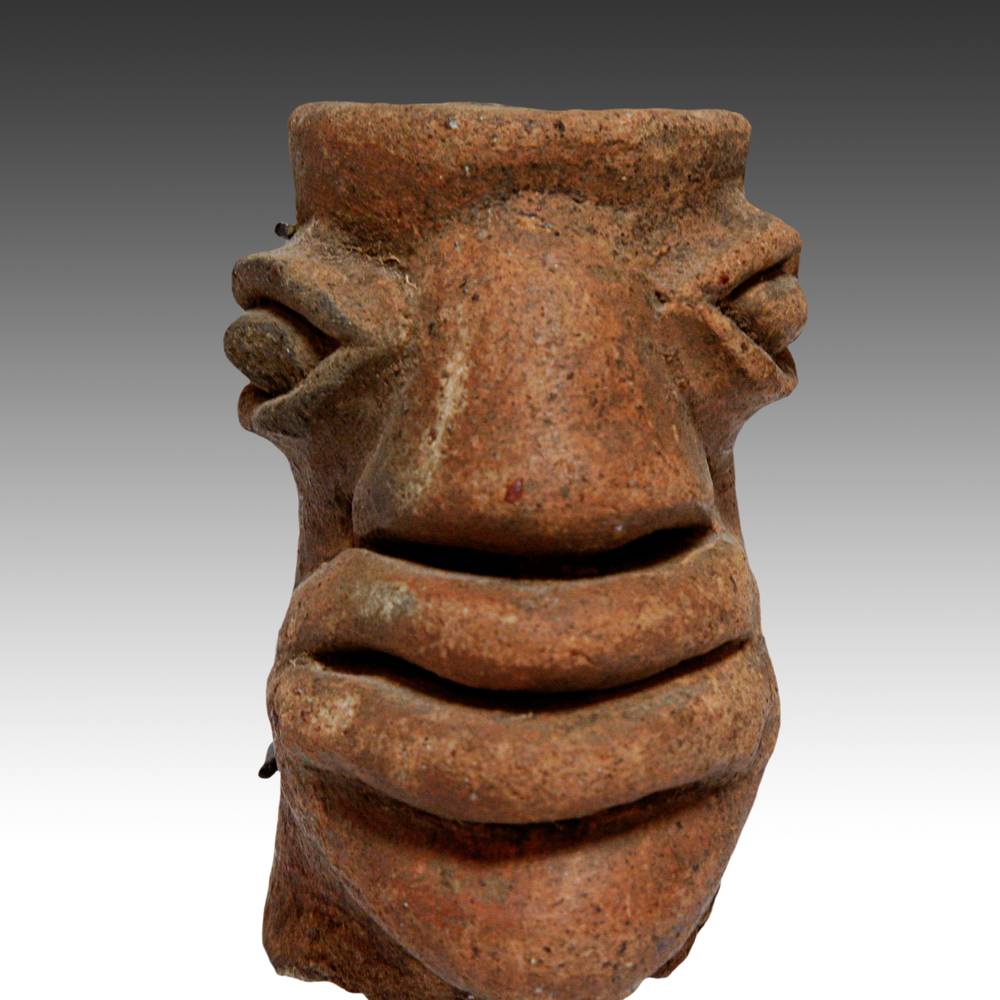
Lips stacked like pillows, and a nose that claims most of the room.
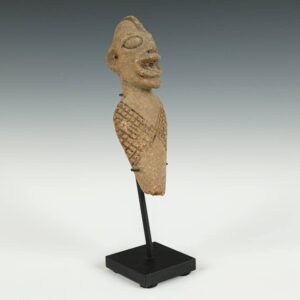
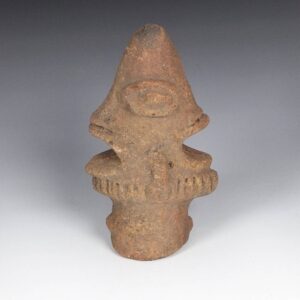
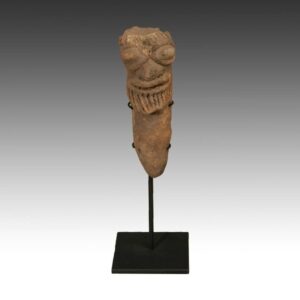
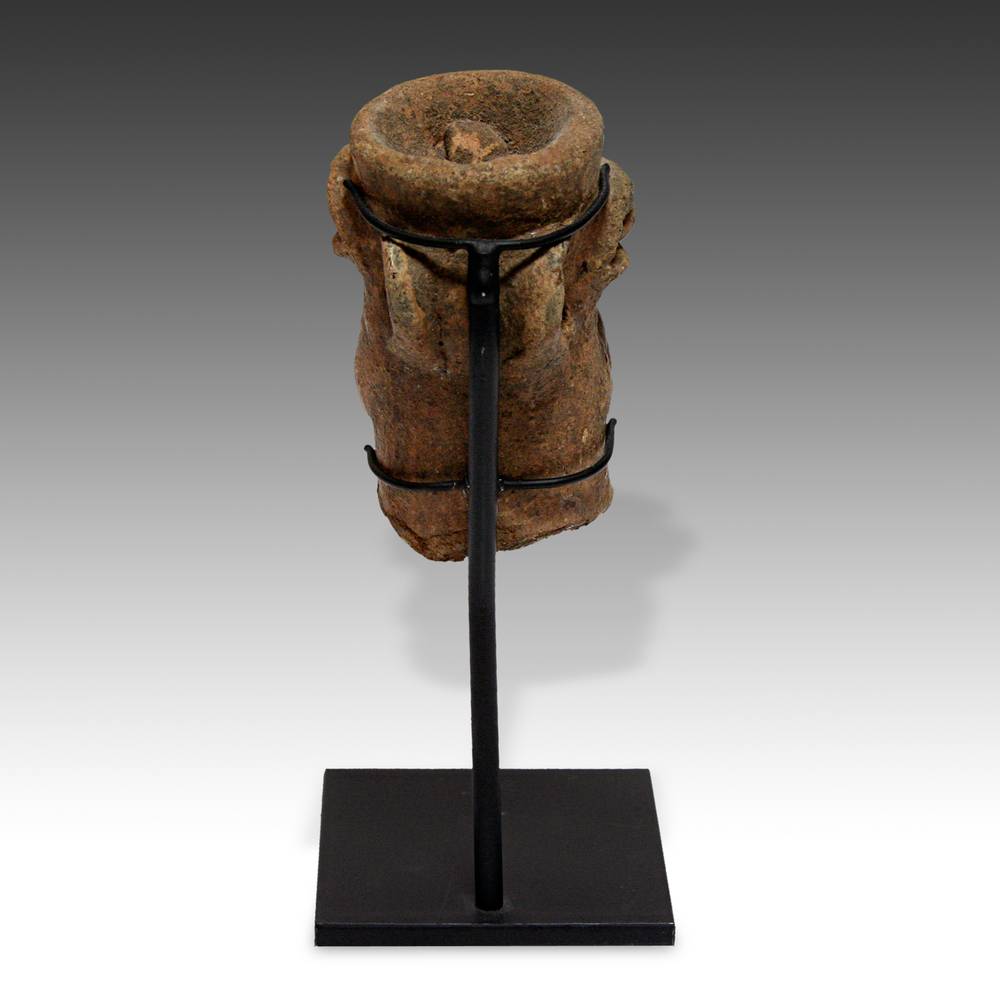
This funerary figure is Koma, from Northern Ghana, West Africa, and dates to the 13th to 17th century. It is terra cotta, mounted on a base. The Koma terracottas, found in mounds across the region, are known for bold, exaggerated faces, and their purpose is still argued over by archaeologists. What survives here is the face: a broad nose, small swollen eyes under heavy lids, and a mouth of thick, layered lips open in a narrow slit. The clay is a warm reddish brown with a gritty surface. It rises on a slim black metal stand to 5.8 inches high.
Nothing subtle about it, and nothing lost by that.