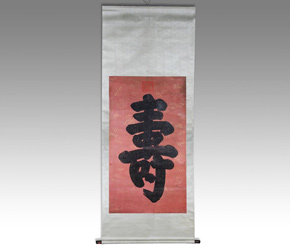
Behind the Scenes – The Making of Japanese Calligraphy
Considering the history of written languages throughout the world, Japan was fairly late in the game compared to other cultures. Cuneiform writing was established over 5,000 years ago…
Considering the history of written languages throughout the world, Japan was fairly late in the game compared to other cultures. Cuneiform writing was established over 5,000 years ago…
Since the day Seiran Chiba entered a calligraphy school at the age of 11, her teachers had always provided her with lessons in the form of characters to…
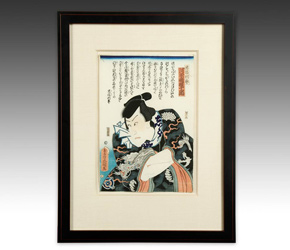
A discussion of famous woodblock artists of the Utagawa school: Hiroshige, Kunisada and Kuniyoshi, each with distinct and diverse styles who represented, along with Yoshitsuya, the last ukiyo-e…
Japanese lacquer works developed a distinct style emphasizing lyrical and elegant surface decorations used to decorate a wide variety of objects, including Buddhist artwork, writing boxes (fubako), altars,…

Japan is a land immersed in tales of ghosts and demons. During the Edo period, scary stories were exchanged first as tests of courage and then as a…
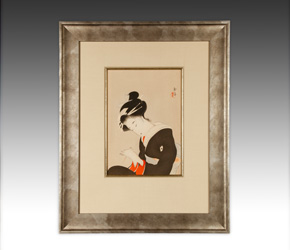
Bijin-ga, which means beautiful person, is a generic term for pictures of beautiful women in Japanese art, especially woodblock print making.
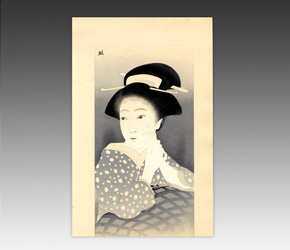
Bijin-ga, which means beautiful person, is a generic term for pictures of beautiful women in Japanese art, especially woodblock print making.
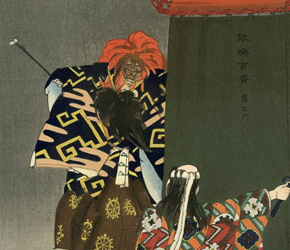
Japanese woodblock prints illustrating the two main types of traditional Japanese theater were Noh drama and Kabuki – those illustrating Noh drama did not appear until the very…
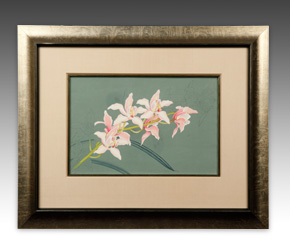
Ranka-Fu is a series of woodblock prints showcasing the best of botanical illustration with a Japanese sensibility. Rank-Fu orchid prints are exceptionally notable for their painterly quality.
New pieces, sent to you before they are shown.